
An over-asked question
Just why the hell are you doing this?


Why do you write?
It’s a question I’m guessing a lot of writers are tired of. Seems like every interviewer asks it, and I’ve seen too many discussions about it on the socials, at the gas station, and the barbershop. Okay, maybe not those last two.
Sometimes the question is there to try and mine the creative dweevil that lives inside the writer’s mind—or perhaps it’s there because the interviewer doesn’t know what else to ask. It’s right up there with, “where do you get your ideas?” Best answer is always from Stephen King, who said he had the heart of a small boy. Beat. He keeps it in his desk.
At the risk of adding to an already overstuffed convo, I have had some thoughts on this lately. I’ll start with Richard Ford… who was a hero of mine, until I found out he’s a bit of an asshole. Oh well, I also like the work of Picasso. Someone asked him for advice for those considering becoming writers. Ford said, “Don’t do it.” He then added, “Unless you’ve tried everything else.”
I’ve said before, probably right on this platform, that writing feeds a part of me that cheeseburgers can’t reach. (Okay, maybe I said, “my soul”, but same dif.) When I asked the question yesterday on the socials, there was a lot of that, “well, I have to or I would go crazy” type answers. I vibe with this as the kiddos say. They probably no longer say that. I do not care! For fuck’s sake, slow down.
In the last decade, I’ve observed two of my three children try to break into industries that are notoriously hard to get into: film, theatre, writing for TV, acting, that sort of thing. It’s hard to watch them bang their heads against the clubhouse door to be told frequently that there is no room for them. I’ve had other friends who were actors and musicians who also banged on those doors. And then there are us writers… so much banging.
Why the fuck are we doing this?
To clarify. The frustration doesn’t have to do with trying to write. I rarely hear of actual writer’s block, though maybe it’s there for some. It’s more the inability to find an agent, an editor, a publisher, or even an audience that takes interest in their work.
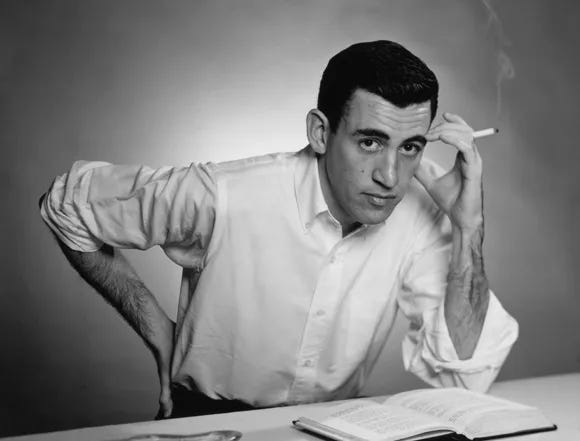
The definition of a writer is someone who writes. Publishing? That’s just business.
- J.D. Salinger
The above sits in my memory and I refer to it a lot (could be a paraphrase, doesn’t matter.) So we can all be altruistic and think that are art is more noble than chasing the capitalistic whims of the industry. To this I cough, “bullshit.” Who among us doesn’t want the big deal, or hell, even the small deal? When we are honest, we want the hell out of it. I’ve met a few writers who don’t care about publishing, but they are as rare as white rhinos. (To be clear, we are talking NORTHERN white rhinos, of which there are only two females left. Because, yes, I looked that fucker up. This is a quality essay!)
I digress.
In my last post, I talked about not writing like our heroes. The post was somewhat misunderstood, as what I meant was an observation that my work was out of step with the trends (rather than copying from other writers). This kind of thinking has actually led me to some new insights on why I write.
Reading authors who I admire, and yes, obsess over, like Willeford (or previously James Crumley), makes me wonder why they kept going. They were published, but neither gained the popularity or fame of other big-name writers. They were the dreaded, “Writer’s-writer.” A label, good god, that may apply to yours truly.
When I read Willeford and Crumely, and go deep into their stories, as much as their lives, I start to wonder what drove them. I’ve been re-reading a huge Willeford biography (By Don Herron), as well as listening on audio to his master’s thesis on the Immobilized Hero. I’ve read snippets of Crumley’s life, as well. Of course, there are those who look back at writers like this and are inspired and even worship at their literary altars. Well, big-fucking-whoop, cuz they have both been pushing up daisies for quite some time. I doubt they were thinking about this when they were on this side of the ground.
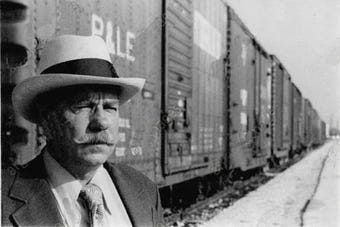
Still, when I consider how Willeford read everything and the thoughts that came out of his study, I am moved. No, I really am, so shut up. Hearing what Kafka meant to him, or Camus, Beckett, and how these writers were trying to understand the human condition through their work… it really is something. I also think about Willeford’s life as an orphan, a hobo, a soldier, a scholar, a professor, a philosopher… and how that formed his world view. It’s quite stunning. Again, I am moved.
Perhaps, people don’t read like this anymore. And too many of us have our eyes on the brass ring of the book deal—a ring that is forever snatched away, and when it is captured it is found to me made of tin.
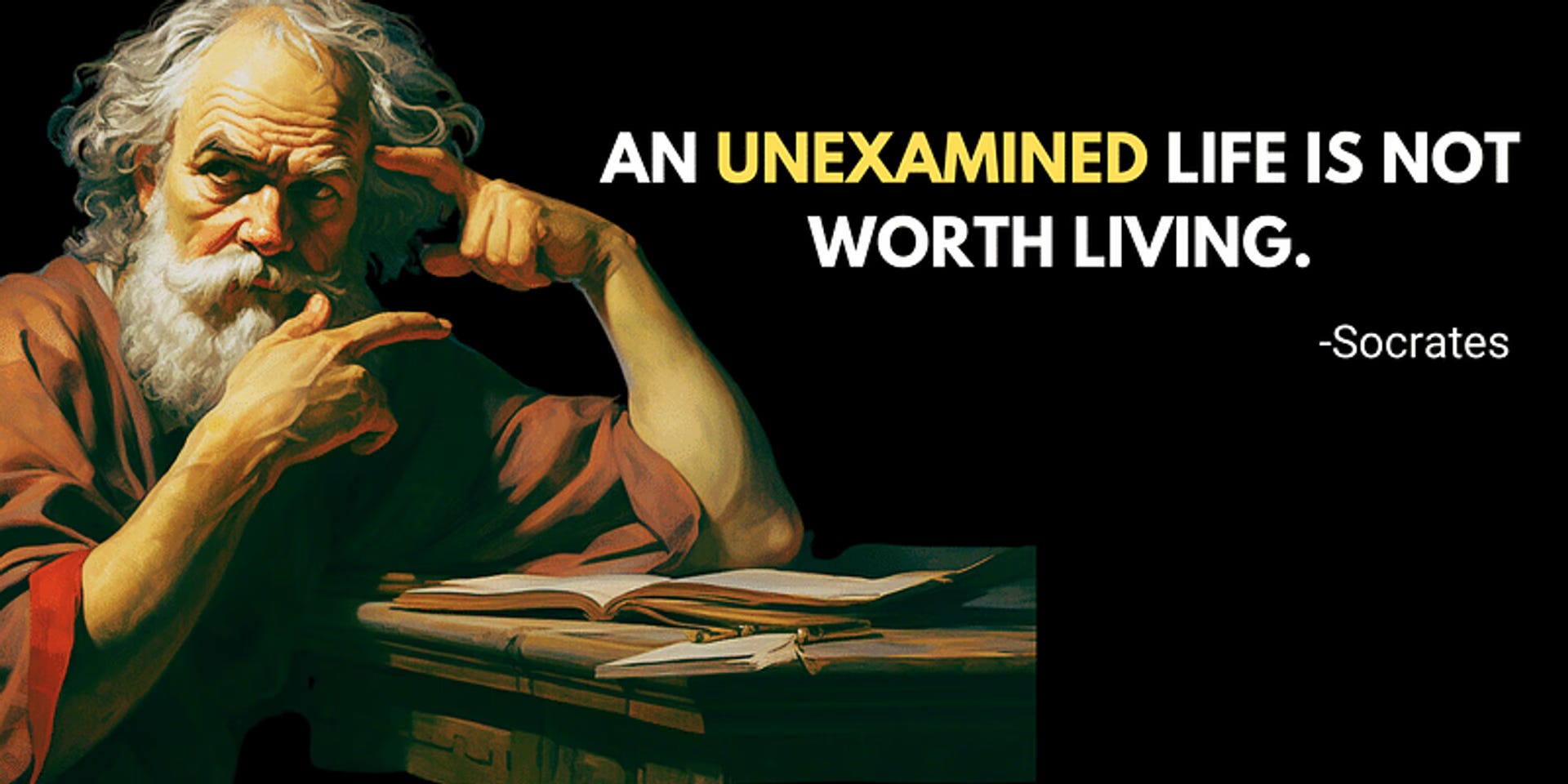
I can’t help but quote Socrates, an unexamined life is not worth living… stop me before I get all philosophical and began to debate solipism and how we all believe that we are at the centre of the universes that we create for ourselves. Too late.
So where do I end up? I write these quirky little novels featuring an ex-pat Canuck who likes Mexican beer and tacos. Deep stuff, for sure. And yet, it does something for me, and the odd reader does pick up on what I’m doing.
Consider my buddy Thomas Trang’s thoughts on Three Minute Hero.
There is a “meta” quality to the novel, though not in a Brechtian alienation or winking at the camera type of way (and I never expected to use the term ‘Brechtian alienation’ in a book review, or indeed ever, but here we are).
… If I’m making this sound academic, well, it really isn’t. This is just how the book spoke to me at a certain level, and you can definitely enjoy the corruption, bad guys with guns, and likely suitcases of money without drowning in postmodern theory.
There’s a motif running through the book about the grid system of roads in the Canadian Prairies, and how – due to the curve of the planet – those straight lines need a curve thrown in every so often to stop them from colliding. If we think about Fischer and Mostly Harold on their own linear journeys, they hit some curves themselves…
Deep stuff, right? And Mr. Trang (TRANG!) observes this in the novel because of what he brings to his reading. I happen to know he is extremely well read, and quite a thinker. And to be honest, this is how I dip into Willeford’s work. Or lately, as I traverse the writers who informed him (Jim Tully), I find myself thinking about our lives on this spinning rock. The below quote is an example of the way Willeford thinks (and there are many of these.)
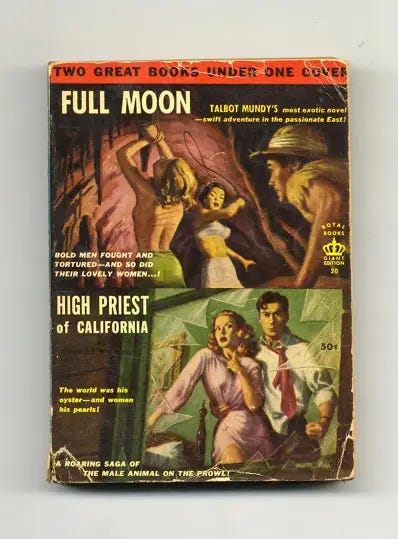
“As I lighted the cigarette I looked at Alyce. Her eyes were too bright. The tragic lines were sharper and were etched deeply from the wings of her nose to the corners of her mouth. she was a woman built for suffering and tragedy.”
― Charles Willeford, High Priest of California
So where does this leave me (us)? Don’t get me wrong, I absolutely love to entertain in my fiction. I’ve come to see it as one of the most important qualities in my work. That doesn’t mean ideas can’t be snuck in there… sometimes unaware even to the author. The late great Robertson Davies created novels of ideas (Fifth Business is one of my favourite novels of all time), but they are also entertaining as hell.
I know that my work doesn’t reach that many people. I’d be embarrassed to post actual numbers, so I never do. But I also know there is an increasing amount of readers who like what I’m doing, you know, they vibe with it. (Shut up!) I get an immense amount of joy going deep into a writer’s work, and the way it can make me think about my life, the world around me, and the people who I relate to.
I’ve heard it said that reading novels creates empathy - and good lord, we could use some more of that. If something I’ve written helps, even in a small way, create that in a reader… or even give them a laugh in an increasingly dark world, well dammit… that’s enough.
The rest is just business.
Thanks for reading - please let me know your thoughts.
And consider becoming a paid subscriber, if only to keep me in beer and tacos. And philosophy books.
When people ask me why I write, I usually say, "why don't you write?" There are more reasons on my pro list than on my con list. But the origin story for me is that I was a reader who got frustrated when I thought the story should have gone another way, so I decided to choose my own adventure.
For me, writing is kind of like that old Dos Equis ad; I don't always write, but when I do I can't not. If that makes any sense. As for Ford, don't toss your heroes off the shelf just because they don't always measure up. I mean, it's not like they are coming to spend the weekend. The good ones just occupy places in your mind and heart for the rest of your life. I hope you didn't miss 'Canada.' After learning John Lennon didn't sign over the royalty rights to his song 'Imagine' to the Communist Party, I'll admit I was a bit shocked, but I haven't dropped him from my playlist. Besides, if you ply your trade long enough we're all bound to cross the threshold into Dickville.