
But when is it done?
Are you just gussying up your prose? Stick a fork in it!


I read somewhere that when you start re-inserting all the commas that you removed in the last edit that means THE NOVEL IS DONE!
Or the story, or the essay, or whatever it is you’ve been editing. I love this quote because it reminds me of something I think about a lot: how do I know when something is done? And I get asked this by others, too. For sure, you will get a plethora of different answers on this. I don’t claim to have any grand insight that others writers have never mentioned. But I do know that awareness and the ability to step back from a work can provide clarity.
Another story…
I’m at a writer thing in my home province Saskatchewan (Hardest to spell, easiest province to draw.) This was during my discovery of George Saunders period. Those who read this stack or talk to me for longer than ten minutes know that I’m kind of obsessed with Saunders (Both him as a writer and as a human.) So, I was surprised when his name was brought up by another writer I was in conversation with.
“You ever read George Saunders?” They asked. “He writes the life out of everything.”
That was a bit like saying my mother wears army boots… but much worse. But it gave me pause. I’d drank the Saunders’ Kool-aid pretty hard. He talks about working on a short story for years. I recall him saying that The Semplica-Girl Diaries (from his collection, Tenth of December) took ten years to write. Of course, he was working on many other things at the same time… one would hope. But the lesson for me stuck.
What was the lesson? Good stories take time (lots of revision, lot of editing). Maybe not ten years worth, but still, don’t be afraid of the work. Keep searching for “doneness.”
What am I searching for in terms of “doneness.”
I’ll start with the big questions. The ones I always ask about something I’ve written.
1. Why this story?
2. Is it true?
The first one really is about whether a story is worth telling. I’ve toiled away at stories that I later discovered were not worth telling. I think in the beginning of my writing I didn’t really know what made a story. These last few years, I’m closer to understanding it. Not there, but closer.
The second one seems esoteric, but it isn’t. If you step back from a story you can smell the bullshit. Or if you wish, the lack of authenticity. And not authenticity as to whether Ford put out the Fairlane in 1950, though that would hurt a story for some. (They did not, it wasn’t out until 1955). It’s more about whether an emotion is true, a revelation, an epiphany, a word on the goddamn human condition! For more on this, read anything Jennifer Egan has written. Her work makes me gasp with truth.
But these are big doneness questions. And there’s lots more editing to do after that. So I’ll circle back to my writer pal’s comment about Saunders writing the life out of something—is there a danger in doing that? Yes.
Work can be tweaked and tweaked until every word is the exact right one. We call that poetry. Only slightly kidding. I’ll be honest, I edit my short fiction way more than my novels. Why? Because it teaches me about compression and quality of language. I can’t do this to the same level on my novels because I’d be even slower than I am now.
I embrace James’s loose baggy monster when it comes to novels. (Though he was writing about 19th C. sprawlers.) I could also bring in Cohen’s Anthem song, “There is a crack, a crack in everything / That’s how the light gets in.” In other words, you gotta leave a few cracks, or it becomes fake in a different way. Perhaps “sterile” is the word I’m searching for.
This idea of the cracks letting the light in is in the back of mind when I’m editing either a story or a novel. I do have to stop and ask myself, am I leaving a crack in because I’m too lazy to fix it? Or because I want the story to be human?
Sometimes the answer is impossible to find. But that’s yet another reason why writing is so fucking hard.
Where are we? Should I edit the shit out of this post right now? No, I won’t. Because it doesn’t need to be perfect. More and more, I know when I’m lying to myself that a story has merit. It just needs some better tighter words or something.
I wrote a story recently that will remain unnamed (and likely unpublished.) It was a short piece, it had a bit of merit, a spark of something in the first draft. So I took it through the paces. I maybe skipped over the “why this story”, or not really analyzed it that way. I just kind of gussied it up… like my mom would say when someone was going out to a dance. You get all gussied up.
Four drafts later, it was better. There were more senses involved, fresher language, better rhythm to the dialogue, maybe a hint of real emotion. I could have kept working on it but I declared it done. It was an ok story, but it didn’t really have the potential of a great story. If I was honest, I knew this. So I just said it was finished. Stick a fork in it, it’s done.
What am I saying… write until you don’t think it’s good anymore? No, I’m saying be honest with yourself. You know when a story kicks ass. The ones that are worth another draft or two (or three). But even those have to be stopped at some point.
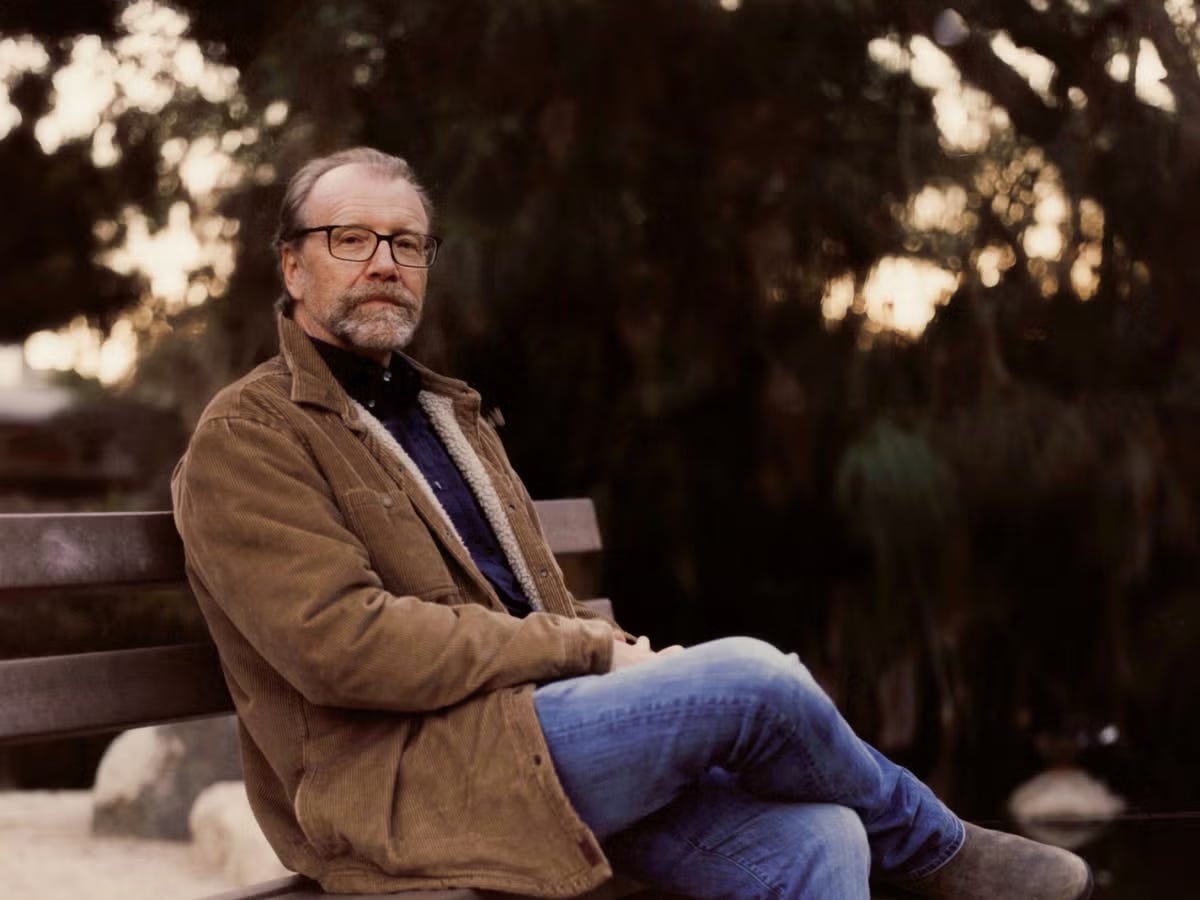
Here’s a lesson I learned from Saunders on editing. This appeared in the Guardian, but I’ve heard him talk about it in interviews and other print pieces. I feel this gives me the permission to just steal it.
Saunders writes:
What does an artist do, mostly? She tweaks that which she’s already done. There are those moments when we sit before a blank page, but mostly we’re adjusting that which is already there. The writer revises, the painter touches up, the director edits, the musician overdubs. I write, “Jane came into the room and sat down on the blue couch,” read that, wince, cross out “came into the room” and “down” and “blue” (Why does she have to come into the room? Can someone sit UP on a couch? Why do we care if it’s blue?) and the sentence becomes “Jane sat on the couch – ” and suddenly, it’s better (Hemingwayesque, even!), although … why is it meaningful for Jane to sit on a couch? Do we really need that? And soon we have arrived, simply, at “Jane”, which at least doesn’t suck, and has the virtue of brevity.
I think this brilliantly portrays the art and craft of editing. You are continually asking and re-asking yourself the same questions. In the above case, you did edit the hell out of that story (well, sentence). And all you ended up with was a single name. This is a clue that maybe you should have stopped sooner. Or scrapped Jane and her couch and writing about something more worthy of telling.
Great novels are not finished, they are abandoned.
Somebody said that. I don’t remember who.
I read that as letting those cracks in. Stories aren’t perfect. But the good ones have value. And the great ones have truth.
Write those.
Thanks for reading. Consider becoming a subscriber if you like what I do. Paid or unpaid, up to you. All my content is free, and I’m glad you came to have a peek.
It's done when it feels good. I can't explain it, but I know 'inside' when that happens. Now, not all stories reach that level of, uh, 'satori'? Some stories are just little romps with about as much satisfaction as a piece of candy - read, enjoy, forget - and nothing wrong about that. Would be a waste of time to polish and agonize over them. But the others, the ones that matter ... to me it's like music: sound and rhythm. Something you hear in your head when you read it. Choice of words? Not so much; simple is usually better. But the structure, that's where it sings, and it's very clear.
I've never spent more than a year on a book (I spent 12 weeks writing my first one before I released it). Oh, I could niggle away at a manuscript for years and enjoy doing so. I've got some perfectionist in me, but I work hard to actively suppress it. Why? Because perfection is boring. That's why I enjoy The Kinks a LOT more than I do Steely Dan.
I once heard Ella Fitzgerald tell a story about how when she was a young up-and-comer she was performing in front of an audience that included a musician she greatly admired. (I can't remember who it was, but he's one of the jazz giants. You'd know his name even if you aren't a fan of jazz.) She was extremely nervous and wanted every note to be perfect. After a song or two, the musician came on stage and whispered three words in Fitzgerald's ear: "Make a mistake." Fitzgerald found this advice profoundly liberating, and it shaped the rest of her career.
So after I've niggled my way through a manuscript a couple of times, I simply bite the bullet and let it go, accepting the fact that it's not perfect, and that it's all the better as a result.