
Read a bad book.
Good books and bad ones are teachers.


You know the drill, you read a great book and you get inspired. For me, I always think of two books (and a film that was written like a book) that made me finally want to start writing. The first was Catcher in the Rye. I read it when I was 23 or 24… something about the character, the cadence of the prose, the whole vibe (like the kiddos say) that deeply intrigued me. The second was One Hundred Years of Solitude (Marquez). It was the first magical realism novel I’d read. I read a lot more Marquez after, and other South America and Latin American writers who wrote in this genre.
Marquez always denied there was anything called “Magical realism.” He just said that how things were in South America. After reading this book, around the same time as the Salinger book, something started to bubble.
Then I went to the film, Smoke, based on Auggie Wren's Christmas Story, by Paul Auster. (I think Auster also wrote the screenplay). This very good film was not the best thing I’d ever seen, but I still can picture myself leaving the theatre, and thinking, “Son-of-a-bitch, I need to start writing.” And I did.
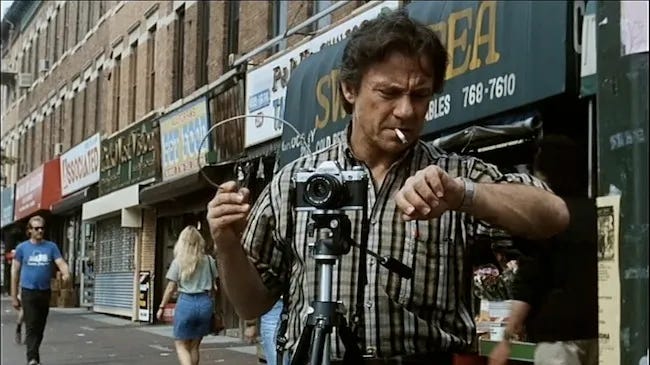
I realized while writing this post that the two books and a film were all consumed around 1995 (I was 22 at the time). A confluence of inspirations.
Side note - there is no surprise that my first novel, Correction Line had deep streams of Magical Realism coursing through it.
So sure, there are those books, and many more, that inspire a writer. Sometimes they are so good they depress you (though, for me this rarely happens.) It’s like the story of the sax player that the first time he heard Charlie Parker play he went out and threw his own instrument in the river. I mean, why bother?
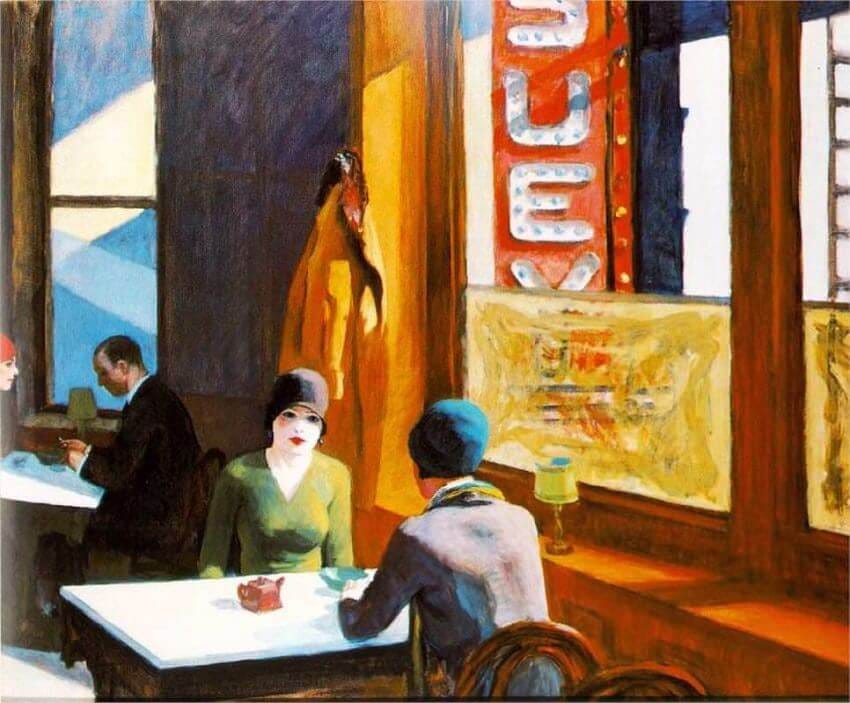
When I read greats like Don DeLillo, or Alice Munro, Flannery O’Connor, or Jennifer Egan, or hell, Hemingway and Faulkner… I know I could never do what they do. It doesn’t fill me with despair. And it’s not like I don’t try (also shades of DeLillo in Correction Line, and my early short stories were most definitely Hemingway imitations.) But I just accept that they are masters and I will not attain that. I can’t paint like Hopper either. Oh well.
There are writers who I think I do write like. Not better or worse, but similar to. I’ve talked a lot about Joe Lansdale in this regard. James Crumley and Richard Ford would fall in there, too. My stories Why Wyoming and Ziggurat (which show up in the re-release of Correction Line) are me doing my Ford imitation… right down to the themes and the sentence structure. Dirty realism, prairie-style.
This is from Ziggurat, and I can hear the Ford cadence in it:
I sat next to him and tried to think of things to talk about. His skin looked so pale, like rice paper over thin bones that would break as easy as a bird’s. There was no sense in talking about my work—him assuming he knew my business, me saying that he didn’t. For damn sure we weren’t going to talk about the cancer. He pulled his John Deere cap over his eyes, sprouts of white hair shot out the sides.
But what about the bad books? What can they teach?
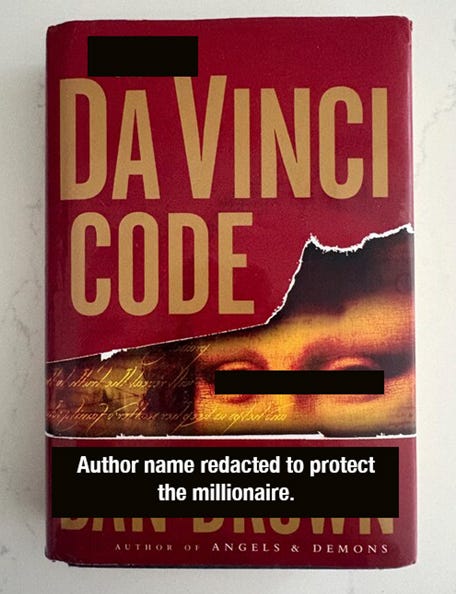
Number one, they can inspire you to do better. As your own skill, craft, and art improve, I think you start to see the flaws in others’ work. I’m not about to name names, and if I did, I wouldn’t name Dan Brown. Or maybe I would.
Here’s the thing about the great DB. His characters are paper thin, his plots are ridiculous, and the prose is a smooth a cobblestone street in Sayulita, Mexico. (I’ll wait for you to get that one.) I’ve got no problem with him selling 40 bazillion books… his success allows publishers to stay afloat. And I also get that he can tell a story that gets people flipping pages. Stephen King is another one. Now Mr. King (better be nice in case he reads this), can be one helluva writer. I’ve read it, and I’ve experienced it. But he can also churn out some stuff that makes you think he phoned that one in.
The bad books I’m talking about are neither of these guys. I’m talking about the ones that bore the absolute shit out of you. The ones where you read a long description about the clothes a character is wearing, or numerous speech tags where people are always “exclaiming things”, or the writer is telling us exactly how they said something.
“Nancy, I don’t think I agree with you,” Bob said not agreeing with Nancy in a tone that made it really sound like he wasn’t agreeing.
Kill me now. I read a lot of these.
I’m not opposed to throwing books across the room. It feels good to do it, and I get extra points if I hit the lamp. But more than that, by seeing the flaws, I say to myself, “I think I can do better than that.”
Okay, prove it asshole.
(I’m tough on myself that way.)
Bad books can teach you a lot. When you stop and analyze why your teeth are on edge, it sheds light on what you are trying to do with your own work. I ask, “Why am I so bored right now?” “Why can I skip four paragraphs and still know what’s going on?” “Do my characters talk like that?” “Why is this so confusing?” “Why do I feel like I’m being lectured?” “Can I hit the lamp from here?”
Etc.
This post is not about slagging those authors… okay, maybe Dan Brown… it’s more about lighting a fire under our collective writer-asses to do better. People will always buy and read bad books. Many of these books will sell better than your books. Writing well doesn’t guarantee anything but the satisfaction that comes with achieving it.
Now go read a bad book.
Thanks for reading this bad substack post—I appreciate all the support I get around here. If you dug it, consider becoming a subscriber. I promise to write something good once in a while.
I never set to go read a bad book, it just happens that some ARE bad and until a few months ago, I felt compelled to finish them. No more! I now feel free to throw that thing across the room after 2 chapters. As to the learning part, unfortunately what makes the books bad is often the same things, so there actually isn’t much learning to grab… now I’ll go back to drooling at a Lehane yarn…
I think of a couple bad authors in college I read that are considered incredible or whatever-- Joyce Carol Oates and Joan Didion bored the ever living eff out of me. But... hey, so did the DaVinci Code lol. Though I adored Angels & Demons and loved the concept. I have a few Dan Brown books on my tbr. But anyway, yes, both are teachers in every which way! JD and JCO taught me not to be boring, and DB taught me not only not to be boring but to extend a concept into fantasy while including lots of realism. Magical. 😉 now if only someone could teach me discipline. This is harder than losing weight this whole getting my shizzle done! Like come on Laura, finish that story! I have it in me, it just hasn't found the page. But it will, oh it will! By the by, I plan on reading Fall In One Day this summer-- so soon! I wanted a setting for my reading of it. I hear it's a beaut! As in a beautiful novel. I had similar experiences as the protagonist it sounds like too. Can't wait til I figure that shizzle out too... ♥️ always great to read what you have to say Craig! 😊